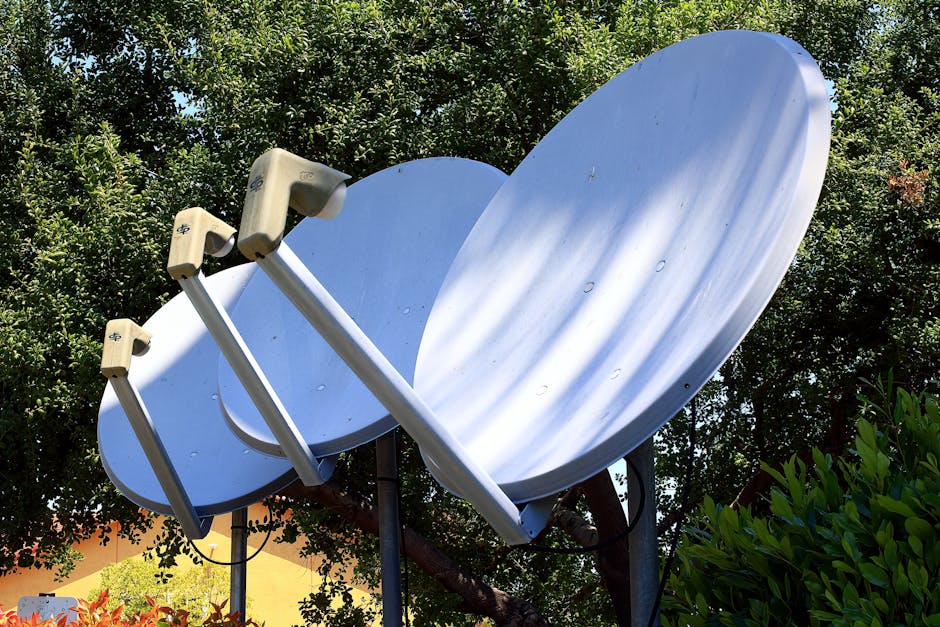
After 12 years of crawling https://www.satdigital.co.za/ over Cape Town rooftops, I’ve seen it all. From salt-corroded mounts that crumble in the southeaster to DIY nightmares that leave your signal dancing every time a breeze hits the Peninsula. Before you call for an upgrade to an Explora or an Ultra decoder, we need to talk about the foundation of your satellite system: the wall bracket.
Stop telling me "the decoder is broken" before you’ve checked your cables. Most of the time, the issue isn't the software; it’s the physical stability of your dish. Before I book a callout, I always ask: What do your signal strength and quality bars read in the settings menu? If they are flickering, your bracket is likely the culprit.
Why the Wall Bracket is the Most Important Part of Your Install
Your dish is a precision instrument. MultiChoice-accredited DStv installation requires the dish to be locked onto a satellite thousands of kilometers away. If your wall bracket is rusted, loose, or bent, your alignment will never hold.
When I arrive for same-day repairs, I see far too many "cowboy" installs where the installer used the wrong rawl bolts for the brickwork. If the bracket isn't rock solid, no amount of software configuration will fix your picture breakup during a Cape winter storm.
The "Wall Bracket Included" Trap
Many customers ask if the wall bracket is included when they purchase a new kit. Here is the reality:
- Standard kits: Often come with a generic mount that might not survive the harsh coastal air of Cape Town. Upgrading: If you are moving from a single view to an Explora or ExtraView setup, you often need a larger, more robust dish and a reinforced mount to handle the increased wind load. Retrofitting: Never assume your old bracket can handle a newer, larger dish. It’s better to replace a cheap bracket than to pay for a second visit when the wind twists your dish six months later.
Pricing Expectations
I hate fluff and I hate vague pricing. You deserve to know what you’re paying for. Below is a realistic breakdown of what you should expect to pay for professional work in Cape Town.
Service Type Estimated Cost Standard DStv Installation (Single-view) R599 – R1,000 Explora/Ultra Setup (Including bracket inspection) R1,200 – R1,800 ExtraView Multi-room Connection (Excl. Hardware) R850 – R1,400 Emergency Storm/Alignment Repair R450 – R750Note: Prices vary based on roof type (tiled vs. corrugated) and height. If a technician quotes you "instant fixes" during a gale-force wind, show them the door. We don't perform alignment on a roof when it’s unsafe.
What Professional Installers Use
When you hire a pro from a company like Sat Digital, we don't guess. We bring the right gear to ensure your dish alignment and signal level setting are locked in tight. Here is my daily carry:
Accurate diagnostic tools: These tell me exactly where the signal is dropping. High-tensile masonry anchors: To ensure the bracket stays in the wall, not the ground. Marine-grade spray: To protect the nuts and bolts from rust.
Explora, Ultra, and ExtraView Setup Requirements
If you are upgrading to an Explora or Ultra decoder, you are dealing with more data throughput and complex LNB configurations. A shaky dish causes packet loss, which looks like "pixelation" on your screen. Furthermore, ExtraView setups—linking multiple rooms—require absolute precision. If your primary dish moves even a millimeter, the entire secondary connection will drop.
Messy cabling is a sign of a lazy installer. If you see cables draped across the roof without trunking or zip ties, those cables will chafe, crack, and fail within a year. A professional will secure the cabling to the mount, ensuring no unnecessary strain is placed on the LNB.
Final Checklist Before You Call
Before you get me or another technician out to your home, go through this list:
- Check the signal: Go to the DStv menu -> Settings -> Signal. Note the numbers. Visual Inspection: Is the dish visibly loose? Can you wiggle it by hand? Cabling: Check if the cable entering the LNB is cracked or showing copper. Water ingress is the number one killer of decoders. The "Wind Test": Does the signal drop only when the wind blows? That is 100% a bracket or mounting issue.
Do not wait for a complete signal loss during the next storm to call for help. A proactive replacement of a rusted wall bracket costs a fraction of an emergency after-hours callout. Keep your signal strong, your cables tidy, and your dish fixed to the wall, not the wind.